|
Welcome
KnowledgeArchitect.org, is a pionneer site dedicated to knowledge, as well as
its natural and artificial architecture.
Natural Phenomenon
As we further consider here, knowledge is a natural phenomenon, possibly the most
fundamental.
That is why it is so intuitive and subconscious. That is why understanding it
is not required to use it.
Structure of Reality
Knowledge is the structure of reality. The energy that is one and encompasses
everything, is instantiates knowledge.
The natural knowledge architecture is that of reality and existence.
Evolution
Without knowledge, evolution can not be.
Evolving implies knowing the structure of the existing in order to try to improve
it, or on it.
Evolution is a very fundamental knowledge process, as it creates and evolves structures,
energy structures, as everything is energy.
Knowledge Processing Basics
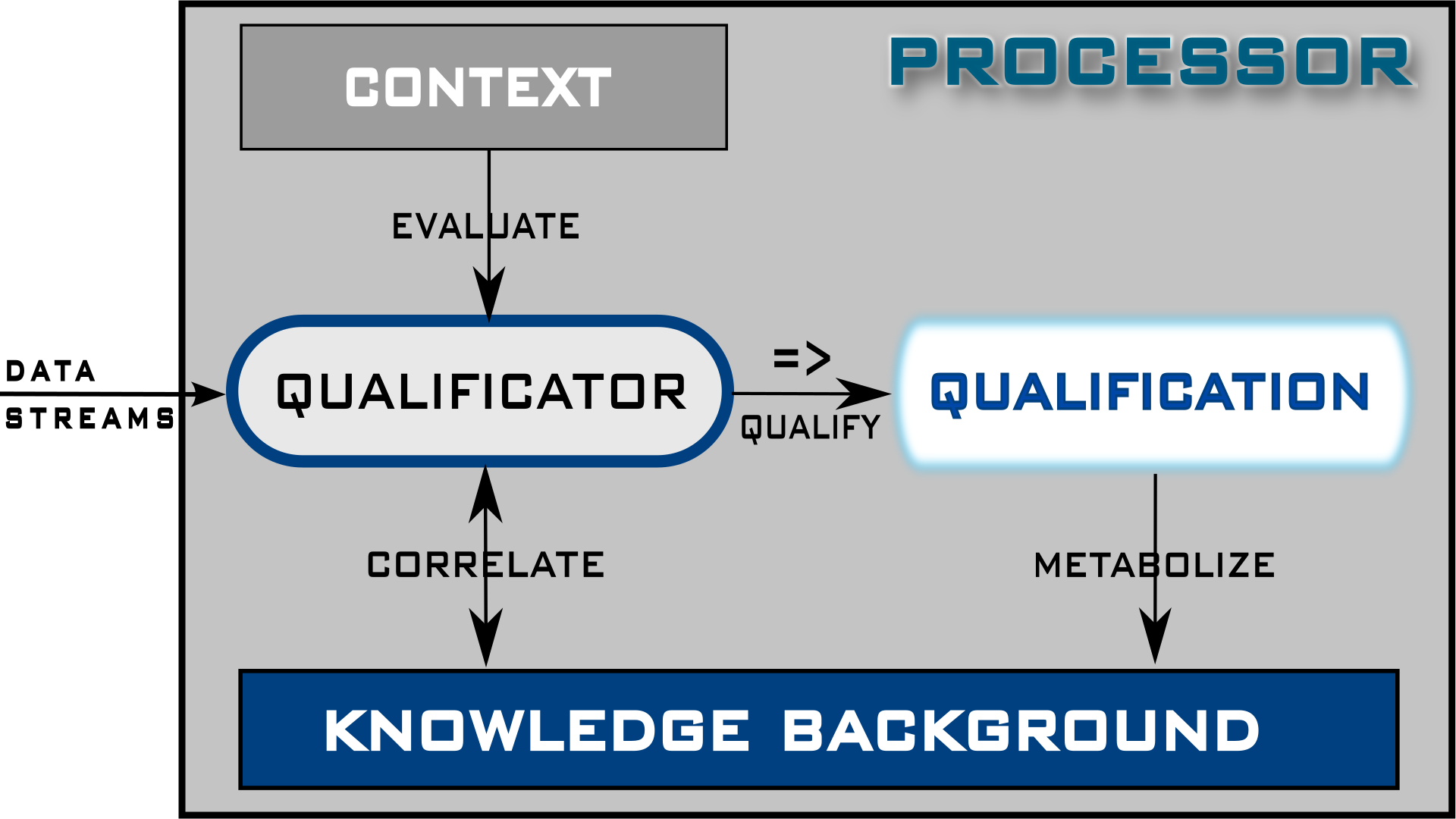
To process knowledge, humans, for example, have some prerequisites, starting with
the fact that they need to model it in their mind,
which can only be done with identified chunks, these are referred to as knowledge
resources.
Note that indentification, which can take many forms, is key since it can't be
identified, it can not be managed.
Model
Minds operate on knowledge resource models. For example, a vehicle driver operates
the model of the vehicle,
as well as the model of the surrounding reality, in his mind, where there are
no effective vehicle nor roads, buldings, etc.
Knowledge Resources
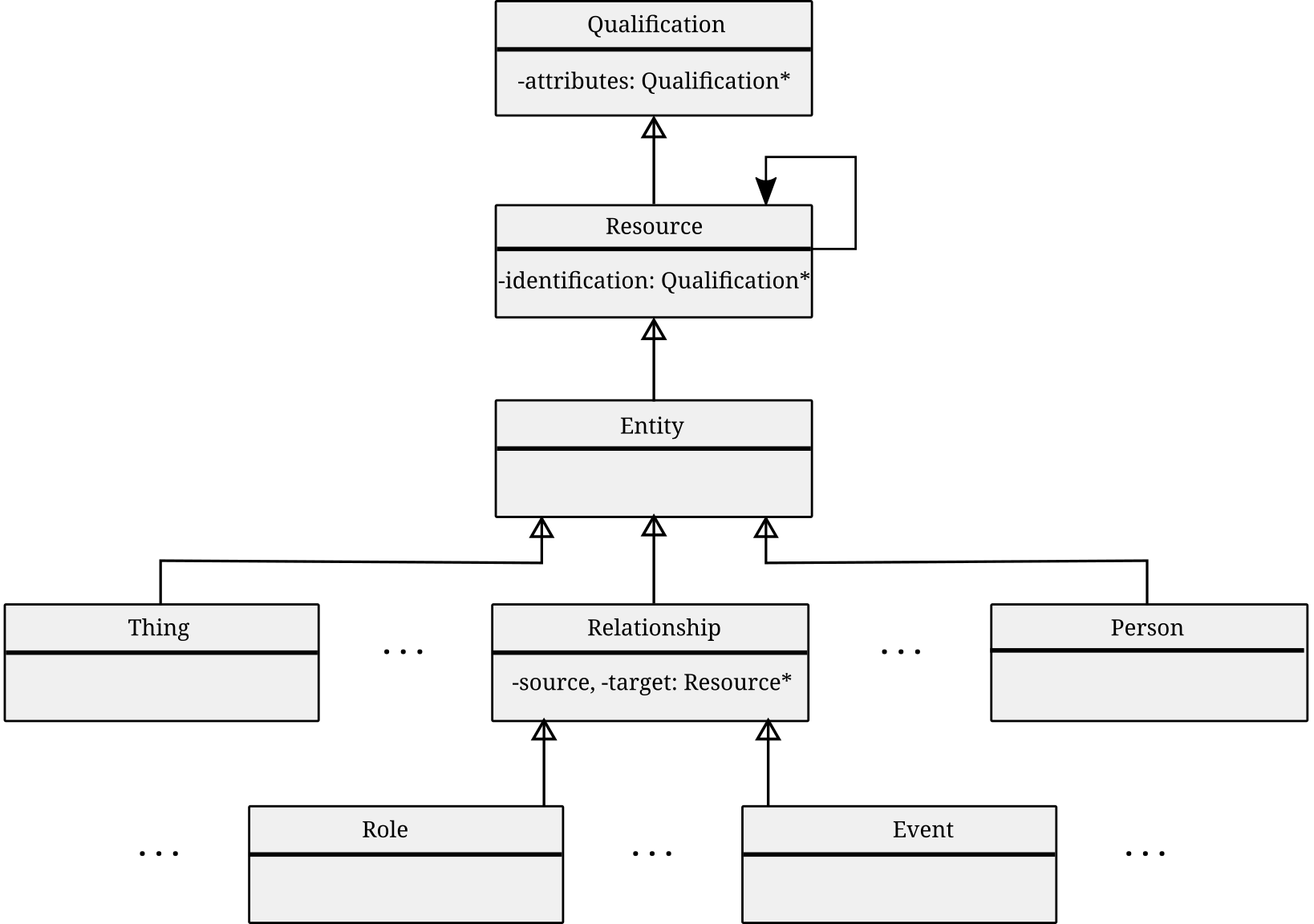
Knowledge can also be qualified as the collection of all knowledge resources.
In that sense, knowledge is only knowledge resources.
These resources can be resource collections of any size or shape. As well, knowledge
resources can be nested to any level,
within other resources, where they can also be considered component resources
of the parent or encompassing resource.
|
Archetypes
Modelling everything that could exist, concrete or virtual, knowledge resources
can take many forms and types.
Yet, some of them, often referred to as archetypes are more fundamental than
others and none so much as relationships.
Relationships
Relationships are resources like any other but they also define and qualify
the relationships between other resources of any kind,
including other relationships.
Qualified Relationships
In principle, relationships are directional, between their sources or owners
and their targets.
Multidirectional relationships are relationship collectons, where each has
its own sources, targets and directionality.
Qualification
Referred to as qualified relationships because each is fully qualified, determining
the roles of its sources and targets,
its goals and strategies, associated behaviors, conditions and contraints.
Qualified relationships are key in many ways,
especially as they define and structure knowledge graphs, as well as define
meaning, purpose, strategy and operation modes.
Alternate Definition
While the previous definition of knowledge seems conceptual and more complete,
knowledge can also be defined as the sum of all knowledge
that ever existed, exists, or will ever exist.
|

|
|
Knowledge vs Information
Knowledge could also be somewaht defined from its relation to information,
as the sum of
all information as well as all meta-information or information on information,
along with all information on meta-information,
and everything around, including meta-cognition.
|
|
Information
This last definition intoduces some of the differences between knowledge and
information, but there is more.
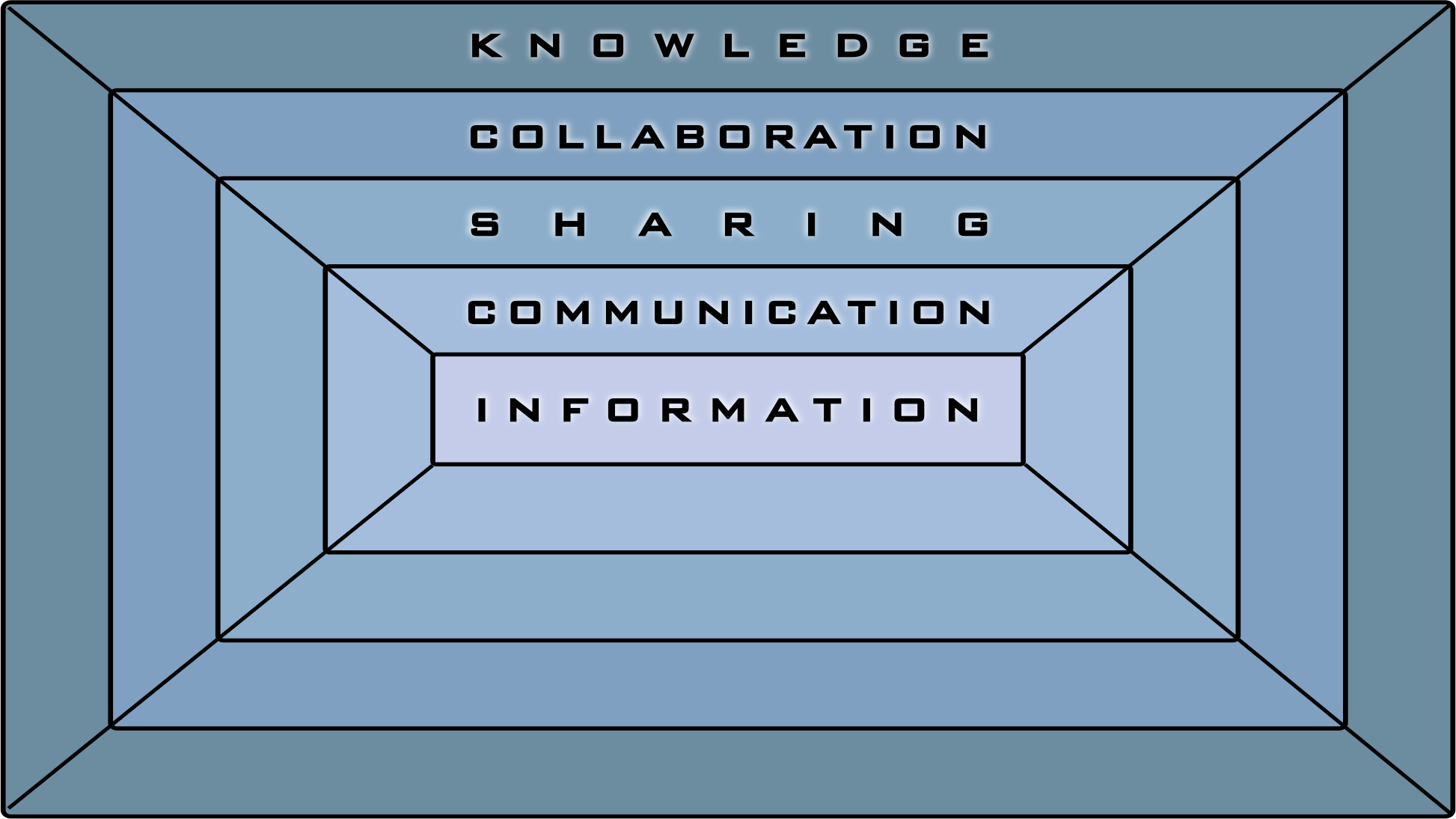
For one, let's briefly consider a key hierarchy:
- Collaboration is a key knowledge tool
- Sharing is a key collaboration tool
- Communication is a key sharing tool
- Information is a communication tool
|
|
|
Data
Data is the computer representation of content, any content.
Information Data is computerized information representation.
Knowledge data is computerized knowledge representation.
Knowledge Data
Knowledge Data is highly structured and represented knowledge graphs built
around qualified relationships.
It is key to effective artificial intelligence.
Understanding Intelligence?
So far, although it seems key to developing effective artificial intelligence,
very few seem to have a clear understanding of what is intelligence.
Most, including AI chatbots and AI gurus typically list what may seem like
some "intelligent" behaviors,
but can't clearly define what is intelligence, not in a clear and actionable
way, as required for computerizing.
The reason is quite simple, as noted above, knowledge and intelligence are
natural phenomena, built into our DNA,
that we naturally evolved to use. They are intuitive and typically operate
subconsciously.
What is Intelligence?
Intelligence is the ability to process Knowledge.
|
Glossary
Because understanding is key, KnowledgeArchitect.org tries to maintain
a glossary of
knowledge architecture related terms, inluding some possibly more specific
to 01 COMMUNICATIONS'
DNAOS knowledge processing technology & collaboration platform.
The KnowledgeArchitect glossary section
already includes definitions for over 300 Knowledge Architecture related terms.
Reference
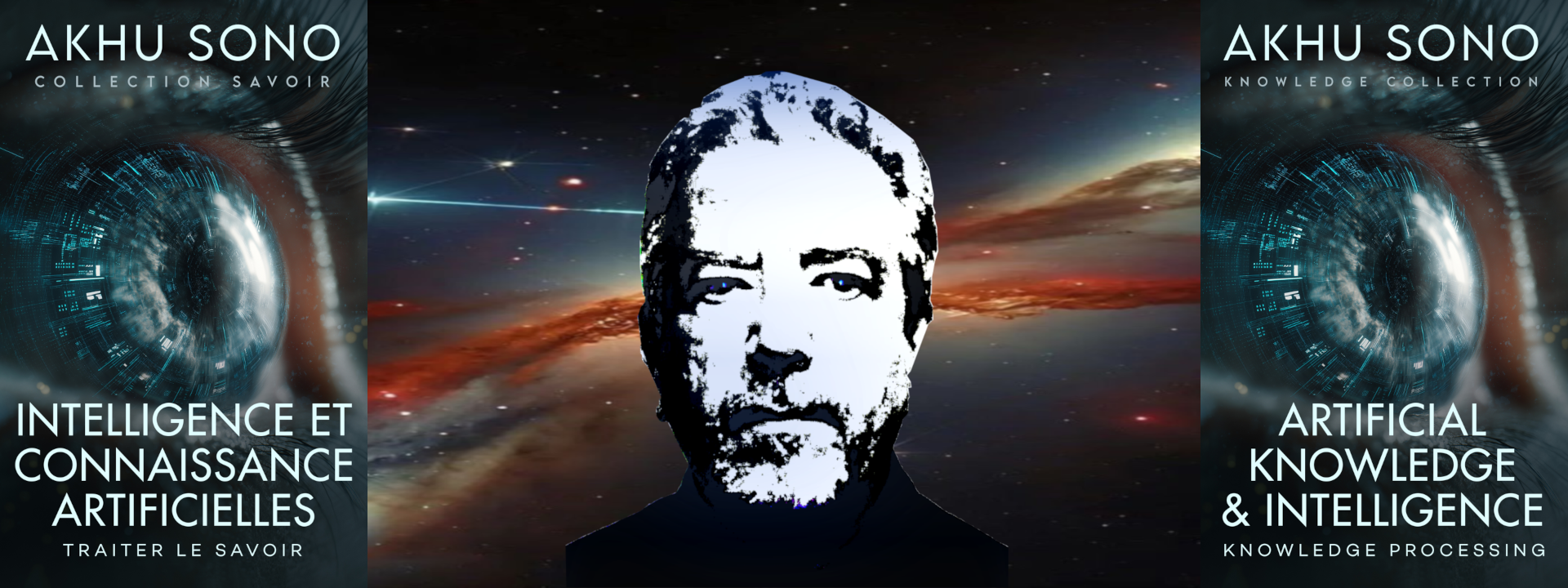
Akhu Sono's
"Artificial Knowledge & Intelligence"
introduces related concepts, causes, technologies and impacts.
|
